
Perimenopause: When the Rhythm Changes
Perimenopause is finally experiencing a cultural shift. More women are speaking about it, experts are teaching it, and I’ve even had the privilege of joining two podcast conversations on the topic recently. The momentum is real.
And yet, perimenopause remains one of the most misunderstood phases in a woman’s life.
Recent data shows that 71% of women feel unprepared for the changes of perimenopause. Many feel blindsided when their once-stable cycle begins to change. Some feel “too young” to be here, not realizing that while the average age of menopause is 51, symptoms often begin 8–10 years earlier, landing squarely in a woman's late 30s or early 40s.
Because every woman’s hormonal landscape is unique, symptoms vary widely, from mood shifts to metabolic surprises.
This week, we are breaking down the underlying physiology. I want to show you that perimenopause is not a decline. It is a powerful transition, a peak phase, and you deserve clarity as you navigate it.
1. Early Signs That Your Rhythm Is Changing
Many women first notice perimenopause not through hot flashes, but through subtle shifts in their cycle. These aren't random; they are early markers of hormonal recalibration.
- Shorter cycles: You may bleed more frequently as your follicular phase shrinks.
- Changes in flow: Heavier bleeding, clots, or mid-cycle spotting.
- Emotional shifts: Worsening PMS, new anxiety peaks, or irritability.
- Sleep disruptions: This is one of the most pervasive issues, affecting nearly 40 to 60% of women in this phase of life. It often manifests as waking specifically between 2:00 AM and 4:00 AM.
- Physical changes: Breast tenderness, libido dips, and blood sugar instability.
2. The Estrogen–Progesterone Shift
The key driver of perimenopause isn't just "low estrogen." The real culprit is inconsistent estrogen combined with declining progesterone.
Think of it as a loss of rhythm. As ovulation becomes less frequent, progesterone drops. Meanwhile, estrogen becomes "spiky", sometimes very high, sometimes abruptly low. When estrogen is high relative to progesterone, we call this estrogen dominance, and it ripples through your metabolism:
- Higher insulin resistance & blood sugar swings.
- Increased inflammation & stress reactivity.
- Changes in body composition.
- Altered thermoregulation (hello, night sweats).
📉 The "Anxiety" Trap Progesterone is our brain's natural "calming" hormone. When it drops, it removes a buffer against stress. Studies found a 2 to 5-fold increased risk for major depressive disorder (MDD) during the peri- versus late premenopause. If you suddenly feel anxious, it might not be you, it might be your progesterone.
3. Why Every Woman’s Experience Is Different
If you talk to five women in their perimenopausal transition, you’ll get five different perimenopause stories. This is because perimenopause interacts with your entire life history, not just your ovaries. Your experience is shaped by:
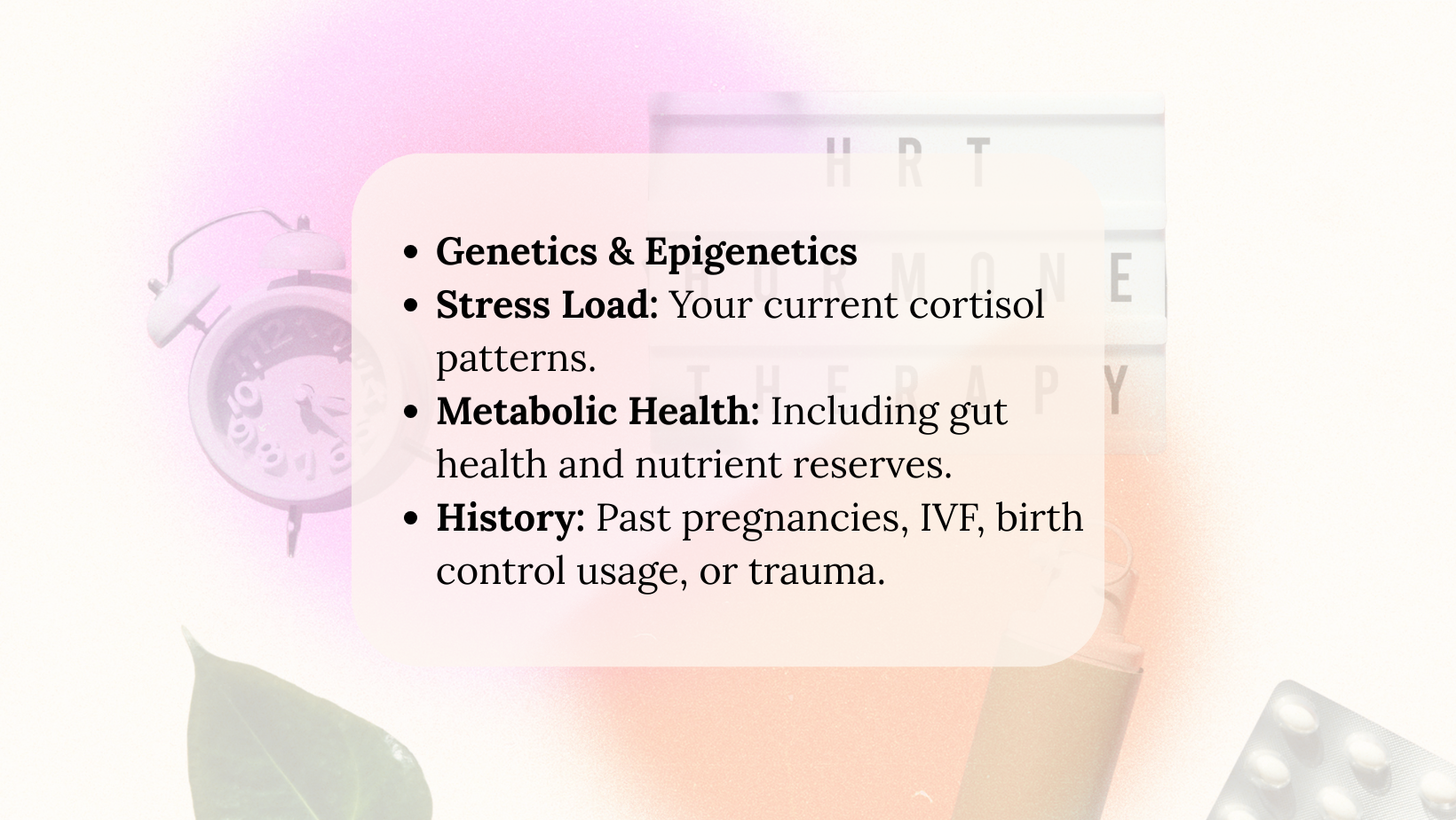
This is why comparison helps no one. Your transition is unique to you.
4. Creating a Support System: For Yourself and Your Circle
Navigating perimenopause requires a two-pronged approach: calibrating your own biology and cultivating a supportive environment.
Whether you are in the thick of the transition yourself, or you are supporting a partner, friend, or sister who is, we need to move away from the idea that women must suffer in silence. Support is not just about supplements and exercise; it is about patience, validation, and flexibility.
For the Woman in Transition (Internal Support) To help your body adapt to hormonal fluctuations, focus on the "Big Three" pillars of stability:
- 🌱 Nutrition: Focus on blood sugar balance and liver support. Prioritize protein and fiber at every meal to steady your energy. Incorporate cruciferous vegetables and magnesium-rich foods, and try to reduce alcohol and ultra-processed foods to lower the burden on your liver.
- 🏃 Movement: "Consistent, not extreme" is the magic formula. Aim for strength training 2–3 times a week and low-intensity cardio (like walking). Crucially: give yourself permission to skip high-intensity workouts during symptomatic weeks.
- 🧘♀️ Nervous System Care: Cortisol is a major amplifier of symptoms. Protect your peace by getting morning sunlight, practicing breathwork, and lowering stimulation in the evenings to protect your sleep.
For the Allies: How to Support a Woman in Perimenopause If you are watching a loved one navigate this shift, your understanding can be a powerful buffer against stress. Here is how to show up for them:
- Validate, Don't Fix: When she shares a symptom, whether it's sudden rage, anxiety, or exhaustion, resist the urge to offer immediate solutions. Often, she just needs to know she isn't "crazy." A simple "That sounds incredibly hard, I'm sorry" goes a long way.
- Reduce the Mental Load: Decision fatigue often peaks during perimenopause due to brain fog and overwhelm. Proactively taking over household logistics or meal planning can be a massive relief to her nervous system.
- Offer Flexibility: Her energy envelope may be smaller or more erratic right now. Be understanding if plans need to change last minute or if she needs to withdraw and rest.
- Normalize the Conversation: Remove the stigma. Asking, "How is your energy this week?" or "Do you need some space today?" creates a safe container for her to be honest without guilt.
The Takeaway
Perimenopause isn’t a decline, it’s a vital transition that every woman will eventually navigate.
Whether you are in the thick of it right now, years away from it, or watching a loved one go through it, clarity is power. When we understand the science of our bodies before or during the shift, we replace fear with agency. We stop feeling like passengers in our own lives and start taking the wheel.
Women deserve to talk about this openly, not just when symptoms start, but as a normal part of our lifelong health journey.
Observe or Connect
- If you are feeling the shift: Track your symptoms for one week. Look for patterns in your sleep, mood, and cycle length to discuss with your provider.
- If you aren't there yet: Start the conversation. Ask an older friend, sister, or mother about their experience, or share this post with someone who might need it. The more we normalize this conversation now, the more prepared we will be when our rhythm changes.