
The Science of Iron Vitality: A Strategic Guide for Women’s Health
Stop dismissing fatigue as "normal." Discover the science of iron, from optimal ferritin levels to the power of cast-iron cooking, and learn how to strategically reclaim your daily vitality.
Despite how frequently we hear the word "iron," there remains a significant amount of confusion, and a surprising lack of deep knowledge, regarding its true power in a woman’s body. We often treat We often treat exhaustion as a standard part of life, but it’s usually a signal. Knowledge is the first step, but to truly reclaim your vitality, you have to look past the surface. Today, we’re digging deeper into the science of iron and why your 'normal' labs might not be telling the whole story.
Understanding the Physiology: Iron vs. Ferritin
Iron is the primary "delivery vehicle" for oxygen in your system. It is a critical component of hemoglobin, the protein in red blood cells that carries oxygen to your tissues and organs. Without enough iron, your cells cannot produce energy efficiently.
To truly understand your status, we must look beyond standard blood tests and focus on the distinction between "spending" and "storage":
- Serum Iron: The amount of iron currently circulating in your bloodstream, your daily "spending money."
- Ferritin: This is your iron "storage tank" or savings account. While your serum iron might look normal, low Ferritin indicates that your body is depleting its reserves. For women, maintaining healthy Ferritin levels is essential for long-term energy and hormonal resilience.
Beyond "Normal": Optimal Lab Ranges for Women
Most conventional labs provide a broad reference range based on the average population. To feel your best, we aim for optimal functional ranges rather than just "not being deficient":
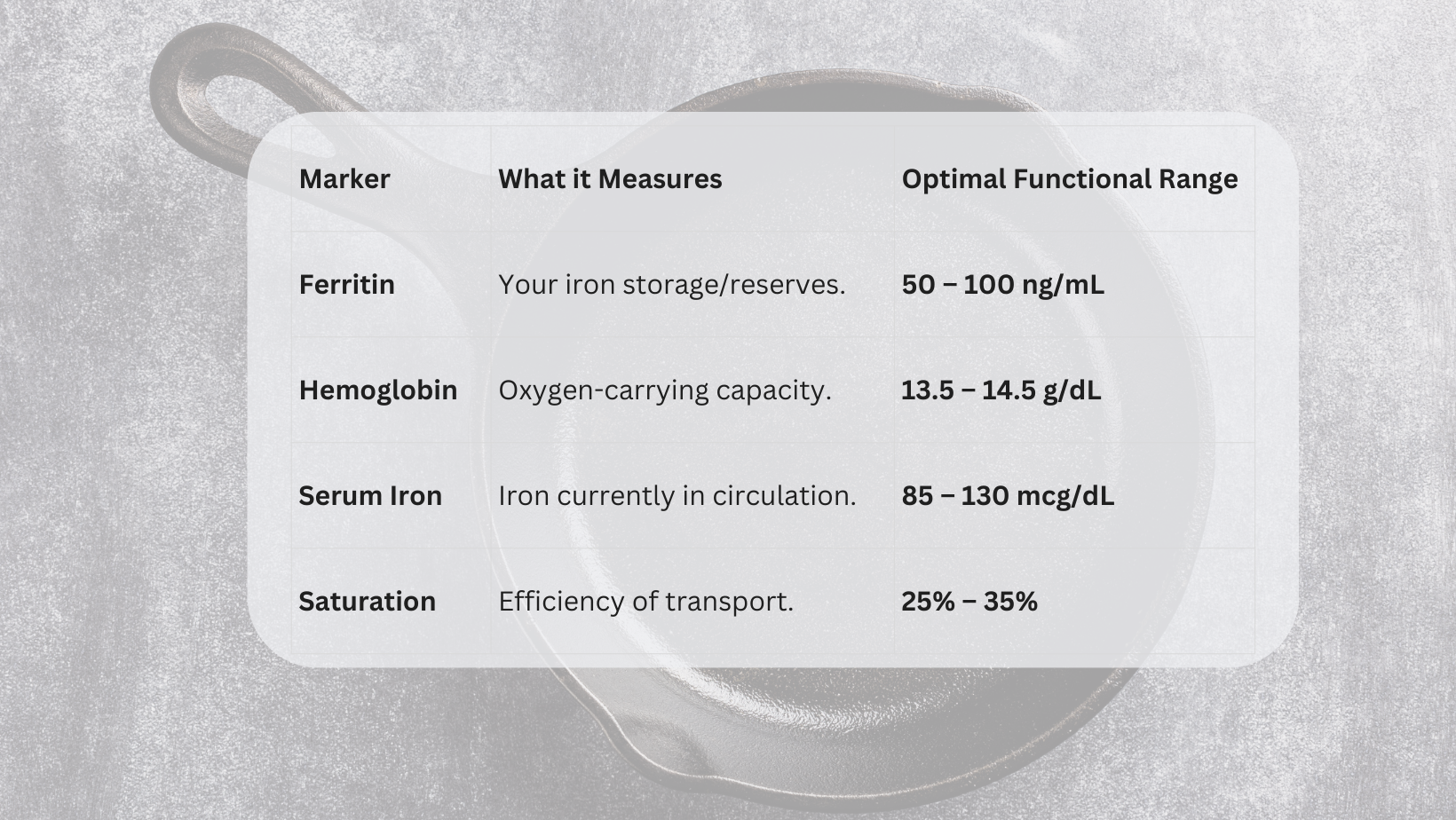
Note: It is common to have "normal" hemoglobin but low Ferritin (below 30-50 ng/mL). This "hidden deficiency" is often where symptoms like hair loss, restless legs, and brain fog begin.
Heme vs. Non-Heme Iron: Bioavailability and Absorption
The way your body processes iron depends entirely on its molecular source. We categorize dietary iron into two forms:
Heme Iron
Found in animal products (red meat, poultry, seafood). It is highly bioavailable, with an absorption rate of 15–35%. Its absorption is relatively stable and less affected by other foods.
Non-Heme Iron
Found in plant-based foods (lentils, beans, seeds, spinach). This form is less easily absorbed (2–20%) and is highly sensitive to "inhibitors" like calcium or the polyphenols found in coffee and tea.
Scientific Insight: You can significantly boost non-heme absorption by pairing these foods with Vitamin C (lemon juice, bell peppers). Ascorbic acid helps convert non-heme iron into a more soluble, absorbable form.
The "Cast Iron" Strategy: A Novel Functional Approach
A fascinating, evidence-based method to support your iron levels is through your cookware. Cooking in cast iron can measurably increase the iron content of your food through elemental leaching.
- The Mechanism: Tiny amounts of elemental iron transfer from the pan into your food. Studies have shown this can increase iron content in certain dishes by over 16%.
- The Acidic Advantage: This transfer is most effective when cooking moist, acidic foods (like tomato sauce or citrus-marinated proteins). A tomato sauce simmered in cast iron can add roughly 3–6 mg of iron per serving.
- The Protocol: For women with marginal levels, using cast iron 3–7 times a week provides a steady, supportive baseline of iron without the digestive side effects sometimes associated with high-dose supplements.
Why Iron is Critical for Women’s Physiology
Our biological requirements for iron are uniquely demanding due to several factors:
- Menstrual Loss: Monthly cycles are a leading cause of depletion, affecting up to 40% of women to some degree.
- Pregnancy & Postpartum: Blood volume expands by nearly 50% during pregnancy, requiring a massive surge in iron to support both maternal health and fetal development.
- The Athletic Gap: Active women lose iron through sweat and the physical stress of high-impact exercise, such as foot-strike hemolysis in runners.
Taking Action: From Guesswork to Data
If you have been feeling unusually depleted, it is time to move from guesswork to data. I suggest requesting a full iron panel that includes Ferritin to see if you are meeting the optimal ranges mentioned above. While dietary shifts and using cast iron are excellent functional strategies, they work best when integrated into a comprehensive, personalized health plan.