Tracking Everything, Feeling Nothing?
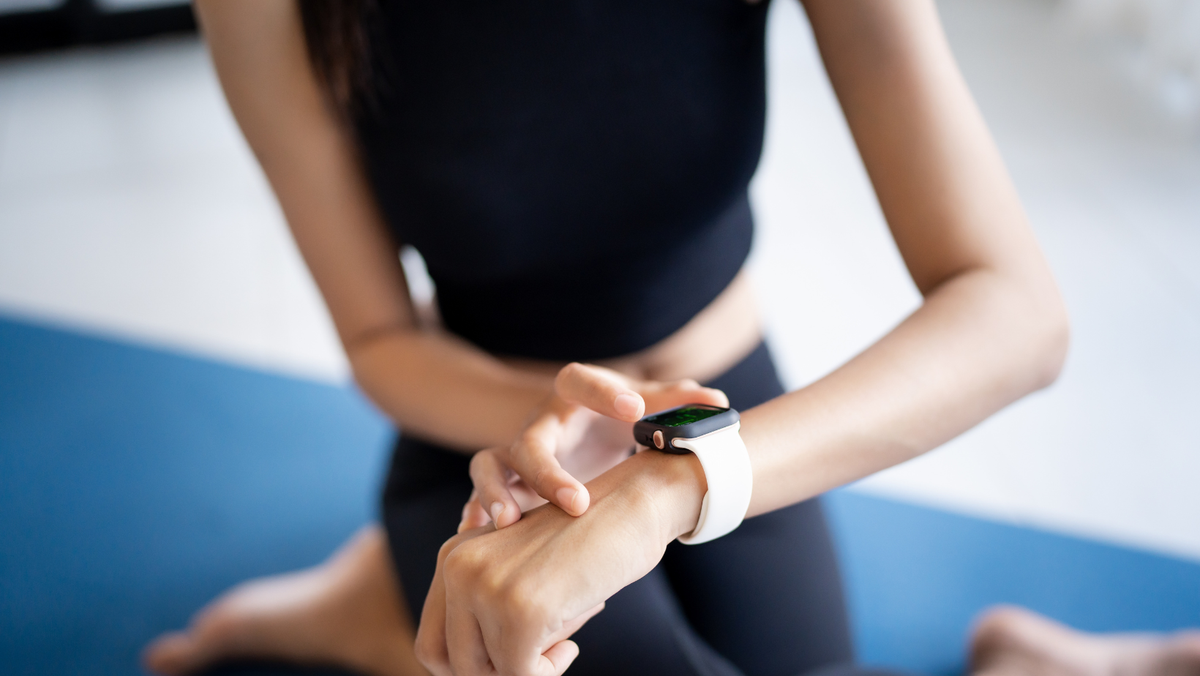
It is 6:30 AM. Before she is even fully awake, she reaches for the device on her nightstand. She checks her sleep score: 82. "Good," she notes, even though her eyelids feel heavy and her focus is already fractured. She sees her resting heart rate is up by three beats; her cycle app predicts the onset of her luteal phase and suggests "gentle movement," despite the rare, organic burst of morning energy she actually feels.
By the time she has even sat up, she has processed four different digital data points about her physical state. But the most vital question remains unasked: How do I actually feel?
In our current wellness landscape, biomonitoring has arrived with a profound promise of empowerment. For many of us who have spent years feeling dismissed in clinical settings, the idea of having objective evidence on our wrists feels like a long-awaited exhale. But as we navigate this age of high-tech self-tracking, a tension begins to emerge. Are these tools truly deepening our self-awareness, or are they quietly replacing our intuition with an algorithm’s interpretation?
The Search for a Language of Our Own
The rise of women’s health tech isn't merely a trend; it’s a response to a historical gap. For decades, the nuances of the female body—from hormonal rhythms to metabolic shifts—were treated as outliers in medical research. When a woman turns to a wearable, she is often looking for more than just steps; she is looking for patterns and a shared language to describe her lived experience. Seeing a physiological spike in heart rate variability during a high-stress week confirms that her sense of "overwhelm" isn't an internal failing, but a measurable biological response. This data provides a baseline for informed advocacy, transforming vague symptoms into a grounded narrative that can facilitate more collaborative and productive conversations during a doctor's visit.
Where Data Meets Wisdom
When we treat biomonitoring as a compass rather than a rulebook, it becomes a powerful ally in building true body literacy. It allows us to see the "long game"—the subtle, trending shifts that are often drowned out by the immediate noise of daily life. This might look like noticing how a specific evening routine ripples through the next day’s recovery metrics, or understanding that a slight rise in resting heart rate isn't a sign of impending illness, but a natural reflection of the body's wisdom during a specific phase of the menstrual cycle. We begin to use these metrics to contextualize our fatigue, learning to distinguish between a one-day blip caused by poor sleep and a month-long signal from the nervous system that requires a deeper shift in our pace.
The High Cost of "Optimization"
However, there is a quiet, persistent pressure in modern wellness to optimize every possible metric. When we outsource our self-trust entirely to a digital score, we risk entering a state of hypervigilance that can be counterproductive to actual health. We have all felt that subtle shift: the stress caused by a "poor" readiness score in the morning, which then creates the very fatigue and anxiety the app predicted. When an algorithm tells us we "failed" to recover, we may inadvertently silence our body’s genuine signals of hunger, energy, or the need for rest. For many women, tracking can become another form of "invisible labor"—another set of numbers to manage in a life that already feels over-scheduled. Instead of fostering peace, constant monitoring can fuel a drive for perfectionism, leading us to believe we can "hack" our way out of the natural, necessary fluctuations of being human.
The Invisible Metrics
As sophisticated as these sensors are, they lack lived context. No device can currently account for the emotional weight of grief, the physical toll of the "mental load," or the nuance of a hormonal shift that alters mood without moving a sensor's needle. A "green" score doesn't mean your symptoms aren't real, and a "red" score doesn't measure your resilience. These tools measure biological output; they do not measure the complexity of being a woman in a real body.
A Framework for Body Literacy, Not Dependency
A healthier philosophy for data isn't about "quitting" the tech—it’s about changing our relationship to it. We can practice an "internal first" scan: before looking at the data, we do a thirty-second body scan to rate our energy on our own terms. We can also choose to move away from daily obsession, looking instead through a weekly lens to see the bigger picture of our health. If the scores start to dictate our mood, we might even try a "data-free" weekend to reconnect with our internal pacing without the digital filter.
Choosing Clarity Over Noise
Biomonitoring is a tool, and like any tool, its value depends on how it is held. It may be a supportive season for tracking if you are navigating perimenopause and want to identify emerging hormonal patterns, or if you are training for a specific goal and need objective cues to prevent burnout. Conversely, it may be a season to step back if you find yourself feeling "guilty" about your data, or if the scores on your wrist carry more weight than how you actually feel in your skin.
Grounded Takeaways
The goal is not to become a full-time analyst of our own biology. The goal is to understand our patterns well enough to support ourselves with more clarity and less fear.
The best health metric isn’t found in an app. It’s found in the moment you feel at home in your body again.