What Cycle Health Really Means

Each month, your body moves through a rhythm that reflects how your brain, metabolism, and hormones are working together.
This rhythm isn’t just about reproduction, it’s a sign of balance across multiple systems: energy, mood, sleep, and even blood-sugar regulation.
When your cycle runs smoothly, it signals that your body is well-nourished, resilient to stress, and communicating in harmony.
When it’s irregular, painful, or unpredictable, it’s often your body’s way of asking for attention or support.
For decades, women were taught to view their cycle as something to manage, hide, or simply “get through.” But your cycle is one of the most insightful reflections of how you’re doing, body and mind.
Learning to understand it is one of the most powerful ways to care for your long-term health.
🧠The Hidden Power of the Cycle
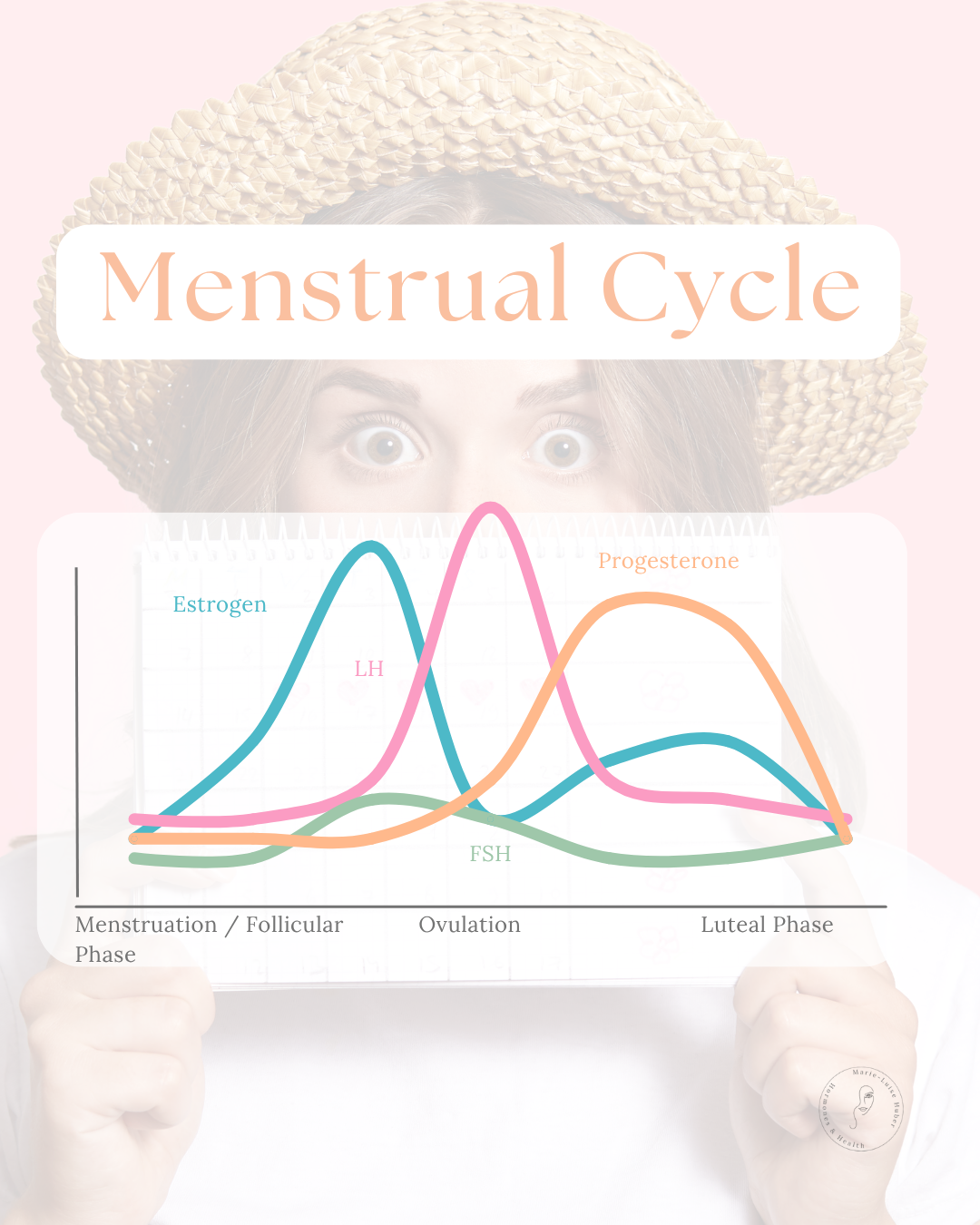
Your menstrual cycle is orchestrated by a finely tuned communication loop called the HPO (hypothalamus–pituitary–ovarian) axis. Think of it as your body’s internal group chat, where the brain and ovaries message back and forth through hormones like estrogen, progesterone, FSH, and LH to regulate ovulation and menstruation.
Also don't forget that a healthy cycle is not defined by “no symptoms,” but by consistency, flow and manageable symptoms.
🔁 What a Healthy Cycle Looks Like
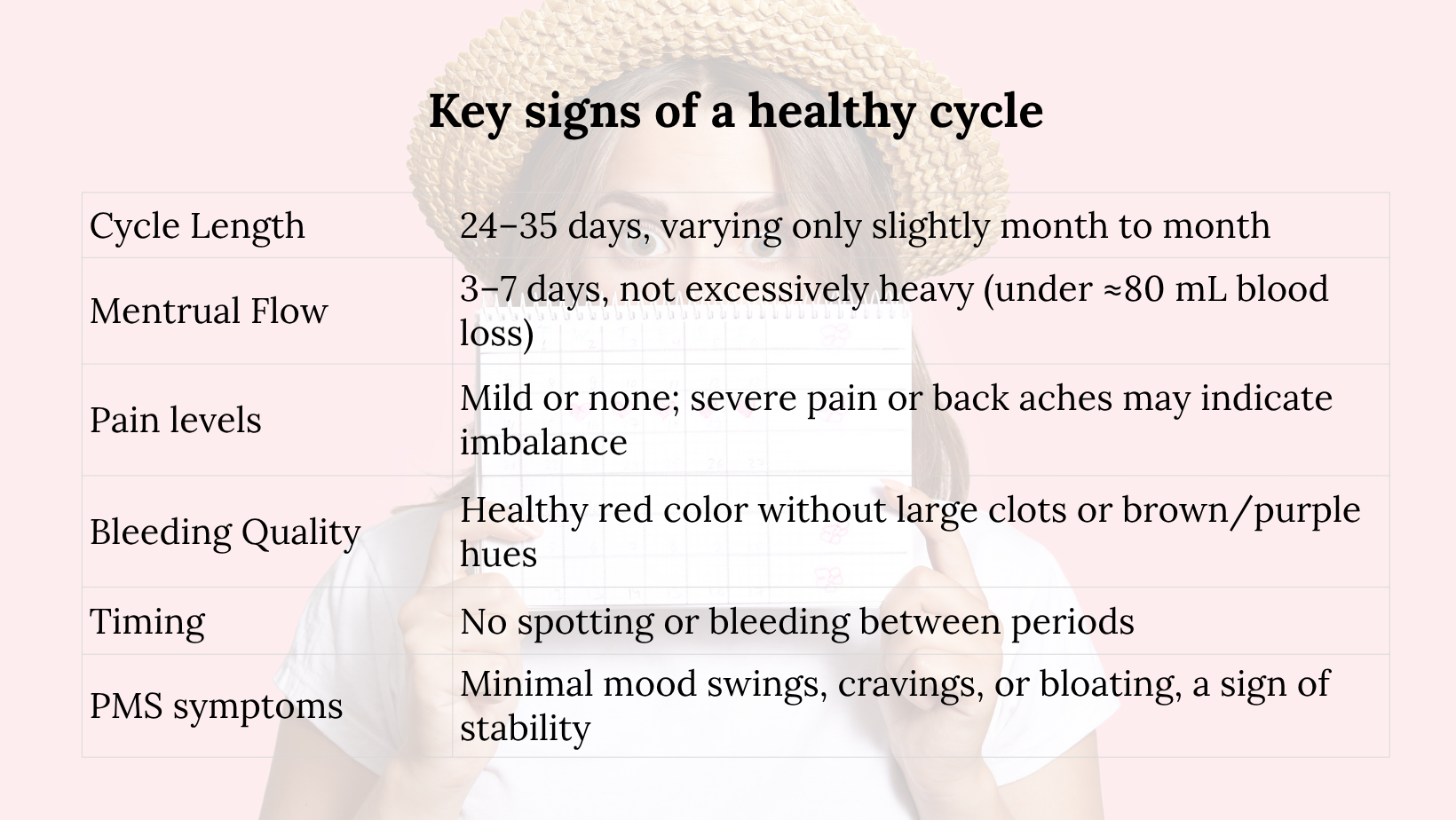
A healthy menstrual cycle is typically regular, lasting between 24 and 35 days, with bleeding for 2 to 7 days, showing consistent patterns in duration, flow, and timing from month to month.
Additional considerations
- Irregularity can be normal after menarche and before menopause as hormones recalibrate.
- A healthy cycle reflects balanced communication between brain, ovary, and uterus — a key marker of whole-body wellbeing.
🧪A Little Biology Refresher (Because We Could All Use One)
🩸 Menstrual Phase (Days 1–5)
A drop in estrogen and progesterone triggers shedding of the uterine lining.
Low hormone levels signal the brain to release GnRH (gonadotropin-releasing hormone), prompting the pituitary gland to secrete FSH (follicle-stimulating hormone).
🌱 Follicular Phase (Days 1–14)
FSH helps ovarian follicles mature. Rising estrogen rebuilds the uterine lining and eventually triggers a surge in LH (luteinizing hormone).
🌼 Ovulation (≈ Day 14)
The LH surge releases a mature egg. Estrogen peaks before ovulation, then dips as the egg travels through the fallopian tube — the window for fertilization.
🌕 Luteal Phase (Days 15–28)
After ovulation, the follicle becomes the corpus luteum, producing progesterone and some estrogen to maintain the uterine lining.
If no fertilization occurs, the corpus luteum breaks down, hormones drop, and menstruation begins anew.
🧬 Science Spotlight: 6 Fascinating Facts
- The timing of ovulation varies widely among women and cycles — it does not consistently occur on day 14 of the cycle as commonly thought. The follicular phase length can range from about 10 to 26 days, meaning fertile windows differ significantly.
- Regular ovulation is a key sign that a woman’s endocrine system is functioning well. It reflects balanced levels of estrogen, progesterone, and other reproductive hormones, which are crucial for menstrual cycle regularity, metabolic health, and reproductive system integrity.
- Women with long or highly irregular menstrual cycles have a significantly increased risk for developing type 2 Diabetes Mellitus .
- Chronic stress can suppress ovulation (like many women experienced during the COVID-19 pandemic).
- Older age at menarche, long and irregular cycles, and amenorrhoea are all associated with increasing postmenopausal fracture and osteoporosis risks.
👩🔬 Why Women’s Health Was Ignored for So Long
For much of modern medical history, women’s health was understudied, even intentionally excluded, because researchers considered women’s bodies “too complicated.”
Hormonal fluctuations were viewed as variables that could “distort” results, so most research was conducted on men.
We’re only now catching up. The realization that the cycle is a core biological rhythm, influencing metabolism, sleep, brain chemistry, and immune health, is changing everything.
But it also means most of us never learned how to read what our cycles are trying to tell us.
💭 Your Cycle Is a Conversation, Not a Complaint
Your menstrual cycle is one of the most honest forms of feedback your body gives you. When symptoms shift — whether it’s mood swings, fatigue, or irregularity — it’s not a sign that your body is broken. It’s communication.
Each cycle offers insight into how you’re managing stress, nourishing yourself, and recovering. Instead of seeing PMS, cravings, or fatigue as random annoyances, think of them as messages.
Your body keeps score, and your cycle often shows the results first.
Track your cycle with curiosity, not control; patterns reveal what your body truly needs. It helps you notice subtle shifts in flow, length, or pain.
If you’d like some guidance in connecting those dots, understanding your unique rhythm and learning what supports it best, I’d be happy to help you explore that together. My 1:1 sessions are designed to help women interpret what their cycles are telling them and make practical, sustainable shifts toward better health.