
Why Your Pelvic Floor Might Be Too Tight (And Why Kegels Aren't the Answer)
We tend to talk about the pelvic floor only in the context of birth. But this "second diaphragm" supports us every single day. Here is why your pelvic floor matters at 25, 45, and 65, and why "tightening" isn't always the answer.

There is still so much to uncover when it comes to the female body, especially around pregnancy. I was reminded of this just yesterday while having lunch with a friend. As we talked, we realized how many layers of women’s health remain unspoken, hidden behind closed doors or simply left out of the conversation entirely.
But one realization stuck with me long after we paid the bill: we tend to compartmentalize our health. We talk about the pelvic floor almost exclusively in the context of "before" and "after" birth, as if this crucial part of our anatomy only matters when it is carrying or birthing a baby.
The truth is, your pelvic floor is not just a pregnancy topic. It is a life topic.
We often assume pelvic health is a "postpartum" conversation. Yet, a study from the International Urogynecology Journal found that over 60% of women who had never been pregnant still reported issues with urinary health. This isn't just about pregnancy; it's about being a woman in a high-stress world. Whether you are 25, 45, or 65, this complex system of muscles is the silent foundation of your daily movement, your breath, and your sense of safety.
It is time we stop whispering about it.
Pelvic Floor Anatomy: It’s More Than Just a Hammock
We often hear the pelvic floor described simply as a "bowl" or a "hammock" that holds our organs in place. While that’s true, it’s a passive image for what is actually a dynamic, responsive system.
Think of your pelvic floor as your body’s "second diaphragm." It mirrors your respiratory diaphragm (the muscle under your ribs that helps you breathe). When you inhale, your diaphragm moves down, and a healthy pelvic floor naturally lengthens and relaxes to make room for that pressure. When you exhale, the diaphragm rises, and the pelvic floor gently lifts.
This "piston" effect happens thousands of times a day. Research confirms this connection: a 2015 study found that when the pelvic floor muscles are contracted or tight, the diaphragm’s movement is significantly reduced. This reveals a critical insight: if you are stressed and holding your breath, you are likely holding tension in your pelvic floor, too.
The Hypertonic Pelvic Floor: Why Kegels Aren't Always the Answer
If you have ever mentioned pelvic health to a doctor or friend, you were probably told one thing: "Do your Kegels." We are conditioned to believe that "tight" equals "strong" and that all pelvic floor issues stem from weakness.
However, for many high-achieving, busy women, the opposite is true. We hold stress in our bodies, clenched jaws, raised shoulders, and yes, a clenched pelvic floor. This state is called a hypertonic pelvic floor. The muscles are constantly contracted and unable to fully relax.
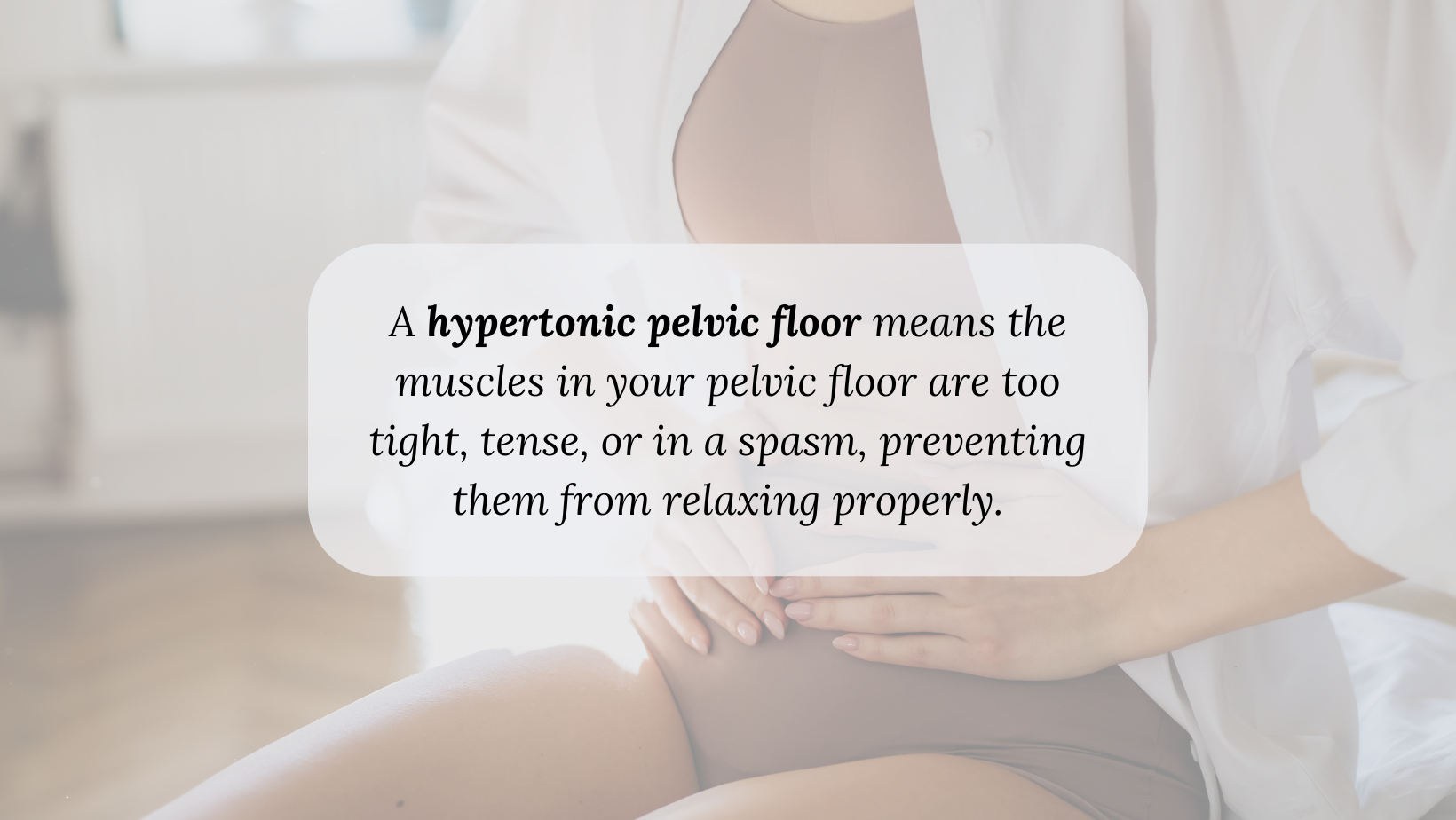
Asking a hypertonic pelvic floor to do Kegels is like asking a person with a clenched fist to squeeze harder. It doesn't build strength; it builds tension. This chronic tightness can manifest in surprising ways that have nothing to do with pregnancy: unexplained lower back pain, hip discomfort, painful intercourse, or a sense of urgency (feeling like you need to use the bathroom right now).
Pelvic Floor Exercises to Reconnect with Your Rhythm
So, if Kegels aren't always the solution, what is? The first step is simply awareness, relearning how to let go.
- The Drop: Throughout your day, check in with your body. Are you gripping your stomach? Is your jaw tight? Often, if your jaw is clenched, your pelvic floor is too. Try a visualization: imagine a flower gently opening at the base of your pelvis, or simply exhale a long sigh and feel your "under-carriage" drop.
- The Breath: Lie on your back with your knees bent. Place your hands on your lower belly. As you inhale, try to direct the air not just into your chest, but deep down into your side ribs and lower abdomen. Feel the gentle expansion. You aren't "pushing" out; you are allowing space.
- The Posture: Notice how you are sitting right now. Are you slumped on your tailbone? This tucks the pelvis and shuts down the pelvic floor muscles. Try rolling your pelvis slightly forward so you are sitting on your "sitz bones." This small shift instantly allows the pelvic diaphragm to stack under the respiratory diaphragm, restoring their natural dance.
A Gentle Call to Action
You don’t need a gym membership to start caring for it; you just need to tune in.
My invitation for you this week: Pick one moment today, maybe while you are driving, waiting for the kettle to boil, or sitting at your desk, and notice if you are clenching. Take a deep breath, and consciously let go.
A Note: I want to be clear: I am not a pelvic floor specialist. I am simply a woman learning to listen to her own body, just like you. However, I believe deeply in the power of expert support when we need it.
If this topic resonates with you and you feel you need more personalized guidance, I have two wonderful practitioners right here in Colorado that I wholeheartedly recommend (Jordan & Megan ) and I would be happy to connect you with them.